To get paid by international clients from the Gulf, check which gateways accept businesses in your country, then compare the fees that stack on foreign cards and currency conversion. Stripe serves the UAE but not Saudi Arabia. PayPal serves both and charges the most on cross-border payments. Regional gateways are often cheaper for regional clients.
Sort by availability first, then by price
The cheapest gateway is useless if it will not onboard a business in your country. Start there.
Stripe announced its official UAE launch in April 2021 and runs onboarding for UAE businesses. Saudi Arabia is not on Stripe's supported-country list, so a Saudi-registered business cannot open a standard Stripe account as of mid 2026. Availability changes, so confirm on that page before you plan around it.
PayPal takes sellers in both countries and is the least friction for a nervous first-time overseas client, who has probably used it before. Tap, Telr, PayTabs, Ziina, Mamo and Checkout.com all publish Gulf pricing or quote for the region. The job is matching one to your country, your clients and how much fee you can live with.
Stripe has the clearest fees if it serves you
Stripe's UAE pricing is the easiest to reason about because it is published in full. Stripe's UAE page lists 2.9% + AED 1.00 per successful domestic card payment, plus 1% for international cards and plus 1% when currency conversion is required.
Read that stack carefully, because overseas clients trigger every line. A client in London paying your UAE account in pounds is both an international card and a currency conversion. The real rate on that payment is 2.9% + 1% + 1%, which is 4.9% plus the fixed fee. The headline number is the domestic one. The number you pay is the stacked one.
PayPal is accepted everywhere and priced for it
PayPal's advantage is trust and reach. Its cost is that cross-border work is where it charges the most. On its , a commercial transaction is 3.40% plus a fixed fee when the buyer is local and 4.40% plus a fixed fee when the buyer is in another market.
Written by
The Delivvo team
Delivvo runs the client cycle for service businesses: inquiry, quote, contract, deposit and delivery. Payments go straight to your own account.
A UAE business can take card payments through Stripe, Telr, PayTabs, Tap or Checkout.com. This post compares what each one publishes, what international clients add to the bill, and which rail suits local or overseas customers.
The first invoice feels bigger than it is. This post lists what every invoice needs, how to set the due date and payment terms, why a signed agreement should sit behind it, and how to turn the first one into a template you reuse.
Egyptian freelancers can get paid by clients abroad, but the options are narrower than in some countries and the pound's recent history makes currency a real decision. This guide covers what Payoneer, Wise, PayPal and bank transfer can and cannot do, and how to set up a cheap, steady way to receive money.
8 min read
Your inquiry link is free.
Free plan. No card needed.
Blog
Guides for service businesses, from the first inquiry to the final payment. Written by the team behind Delivvo.
Then comes the part people forget: conversion. PayPal's fee page lists a 4.0% spread above the base exchange rate when you receive and convert in the Middle East and Africa region, and 3.0% on balance withdrawals. A 4.40% receiving fee plus a 4.0% spread takes a real piece of the invoice before the money reaches your bank.
One useful change: in October 2025, e& money and PayPal announced a partnership for instant dirham withdrawals in the UAE. If PayPal is your main rail, that shortens the trip from client to spendable cash.
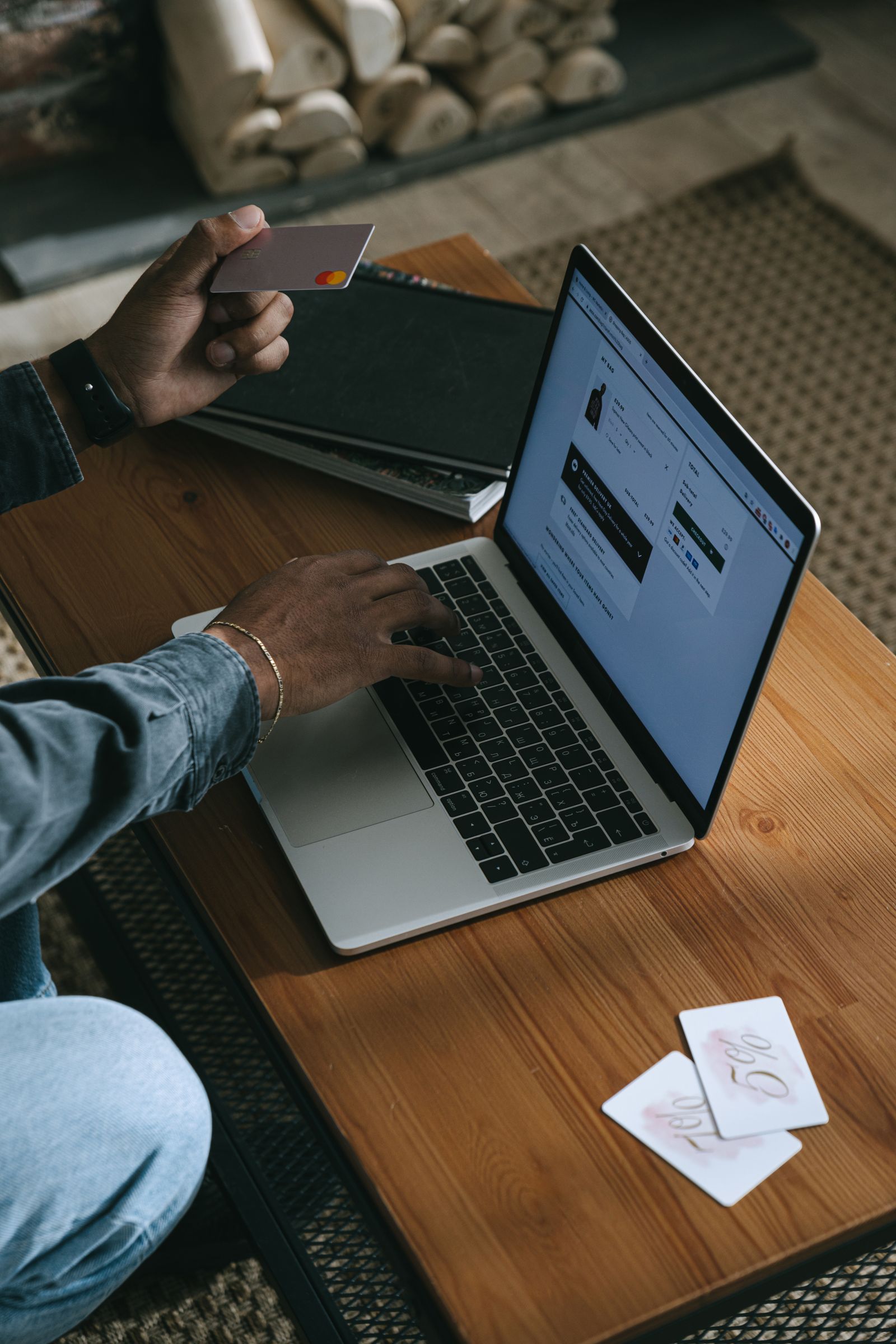
A freelancer at a wooden desk paying online with a laptop and a card in hand
What the regional gateways publish
Local processors are often the better answer for clients in the region, and some are open about price. Here is what the public pages say.
Tap publishes a Saudi mada rate of 1% capped at SAR 200. Its general card rates are not on a public page, so ask for them in writing.
Ziina's help center lists 2.6% plus AED 1 in the UAE, with an extra 1.5% for non-AED or international cards.
Mamo's pricing plans show about 2.7% + AED 0.8 for local cards and 3.2% for international cards on the Premium plan.
Telr and PayTabs publish tiered plans, with different numbers in the UAE and Saudi Arabia, and Checkout.com quotes privately. Check each page on the day you decide, since these figures move.
The pattern is the same everywhere. The local card rate is reasonable, and anything international or converted costs more.
Count conversions, not just percentages
Each currency change takes a cut. A payment can move from the client's bank to the gateway, from the gateway's currency into yours, and from the gateway balance to your bank. That is up to three steps, and each can carry a spread.
The most reliable saving is to cut the number of conversions. If your clients pay in dollars, hold a dollar balance and move money to dirhams or riyals when you need to, instead of letting each payment convert on arrival. Invoice in the client's currency only when you have a way to receive it cheaply. Our guide to who holds your money when a client pays explains what each rail does with funds in the meantime.
Fees are what you lose on money that arrives. Late payment is money that has not arrived. In Remote's contractor report, 85% of freelancers said they are paid late at least some of the time, and just over 21% are paid late or not at all more than half the time, according to Remote. Design for both problems.
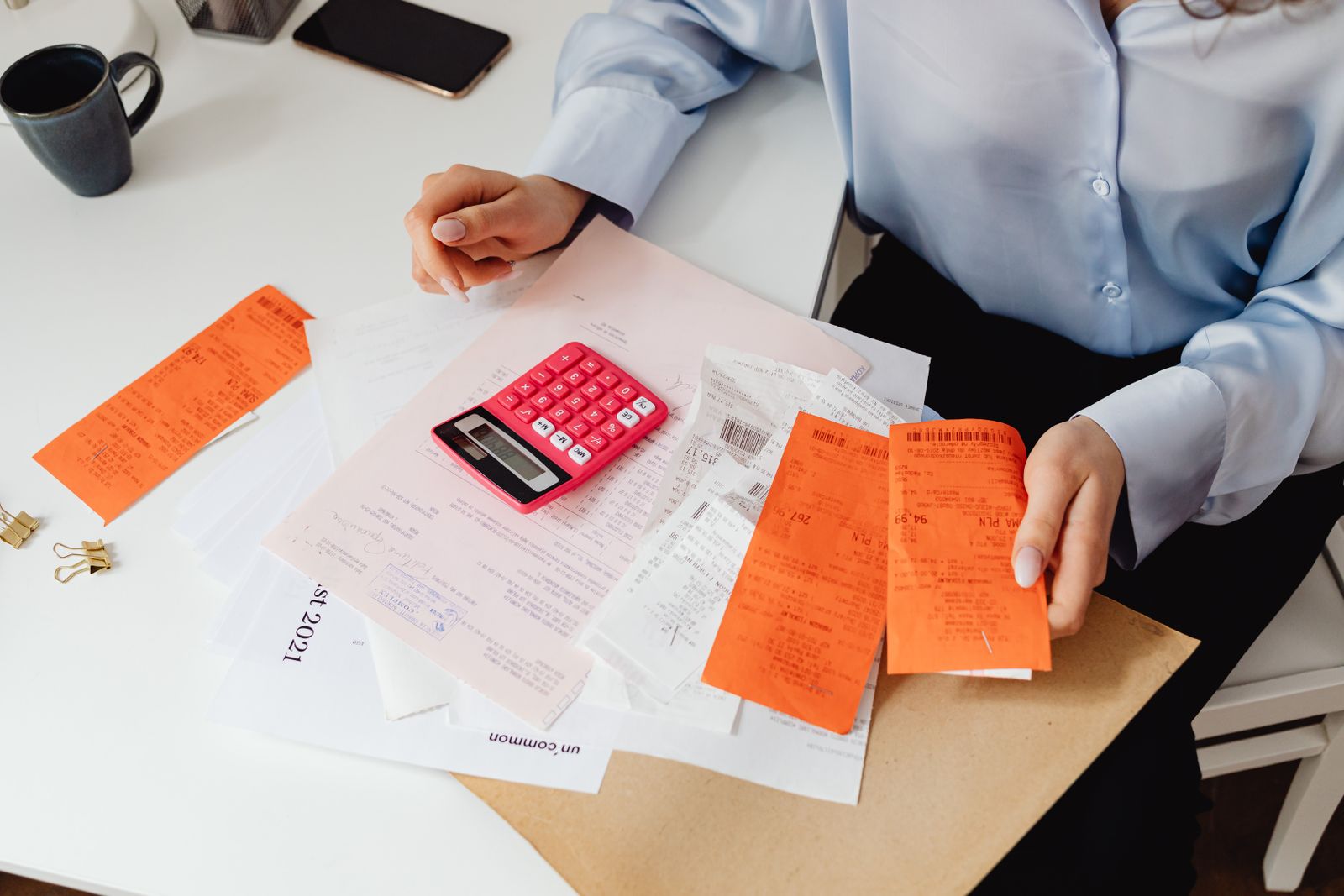
A freelancer reviewing invoices and fees with a calculator at a desk
Make it easy for the overseas client to pay
A good rail still fails if the client cannot work out how to use it. Overseas clients stall for dull reasons: they do not know the amount in their own currency, their bank blocks an unfamiliar payee, or the invoice does not say how to pay.
Put the currency on the invoice next to the amount, and say whether the amount is fixed in that currency or converted at payment time. State your payment terms in plain words, such as "due 14 days after the invoice date". Offer one primary way to pay and one backup, not five. A card link for small invoices and a bank transfer for large ones covers most clients.
Ask for a deposit before you start. A deposit of even a third of the project reduces the risk that comes with a new client in a country you have never invoiced, and it tests the payment route early. If the deposit fails because of a blocked card or a bank limit, you learn that on day one instead of after delivery.
Finally, keep your own records of what each client paid, in which currency, and what reached your account after fees. Your accountant will want those numbers, and you will want them when you decide whether a client is worth their payment costs.
How to choose, in order
Availability first. In Saudi Arabia, start with PayPal, Tap, PayTabs or Telr. In the UAE you have the full menu.
Match the rail to the client. A cautious first-time overseas client may only trust PayPal. A repeat client will pay a card link with lower fees.
Count conversions, not just the percentage.
Get quote-only pricing in writing from Checkout.com and any gateway that does not publish its rate.
Keep the invoice and contract separate from the rail. The gateway moves the money. The documents around it are the experience.
If you invoice in Saudi Arabia, read the ZATCA e-invoicing rules before your first overseas invoice.
How Delivvo fits around the gateway you choose
Delivvo does not process payments and never touches the money. It connects to the gateway you already run (Stripe, PayPal, Tap, Telr, PayTabs, Checkout.com and others), the client pays through your account, and Delivvo takes 0%. It is never the merchant of record.
What it adds is everything around the payment.
Connect your gateway with your own keys on the payments settings. Keys are stored encrypted.
Send a quote built from packages and add-ons. The client picks, signs and pays the deposit on one page.
Delivvo creates the client, project, contract and invoice from that quote.
Invoices carry sequential numbers in your format, a Tax Invoice title where it applies, and a verification code. Anyone can enter the code to see the issuer, number, date, amount and status.
Documents can be in Arabic or English, so a Gulf client and an overseas client can each read the same invoice in their language.
If an invoice goes unpaid, reminders go out at 7, 14 and 30 days and stop once it is paid.
The boundary matters: Delivvo does not change your gateway's fees, and it cannot make Stripe serve a country Stripe does not serve. It sits on top of the rail you chose and makes the moment of paying look like the last step of a real engagement, not a random link in an email.
For tax details on invoices, see invoices and tax, and check VAT treatment for foreign clients with your accountant or lawyer.
FAQ
Can a business in Saudi Arabia use Stripe?
Not as a standard merchant as of mid 2026, because Saudi Arabia is not on Stripe's supported-country list. Saudi-based businesses commonly use PayPal, Tap, PayTabs or Telr. Check Stripe's country page before deciding.
What is the cheapest way to accept international client payments from the Gulf?
It depends on conversion, not only the processing rate. A local card rate near 2.6% to 2.9% can pass 4.9% once international-card and conversion surcharges stack. Cutting conversions usually saves more than chasing the lowest headline percentage.
Does PayPal work for receiving money in the UAE and Saudi Arabia?
PayPal serves sellers in both, though terms differ by country and change over time, especially withdrawals to a local bank. Confirm the current rules inside your PayPal account.
Does Delivvo add payment fees?
No. Delivvo takes 0% of payments. You pay only your gateway's own fees.
Delivvo runs the whole client cycle for service businesses, from the first inquiry to the quote, contract, deposit, invoice and delivery, so an overseas payment is the last step of a clear process and not a chase. Clients pay you directly through your own gateway, and Delivvo takes 0%. Start free